
Part of a planned upgrade, not a bolt-on
Home Battery Installation in Newport
Newport is our most common full-upgrade suburb: board, safety switches, hot water and often solar, done as one planned package rather than four separate callouts. A battery slots into that sequence rather than sitting outside it.
- Newport 3015
- Jemena network
- REC 37223
The short answer
Home battery installation in Newport usually forms part of a wider upgrade, because homes here are at the age where the switchboard, the wiring and the hot water service all reach end of life within a few years of each other. Newport is a Jemena address, so the battery inverter needs a Jemena application. Mature street trees reduce solar output and therefore the daily charging surplus, so sizing is often 8kWh to 10kWh usable, at $5,500 to $9,500 after the federal rebate.
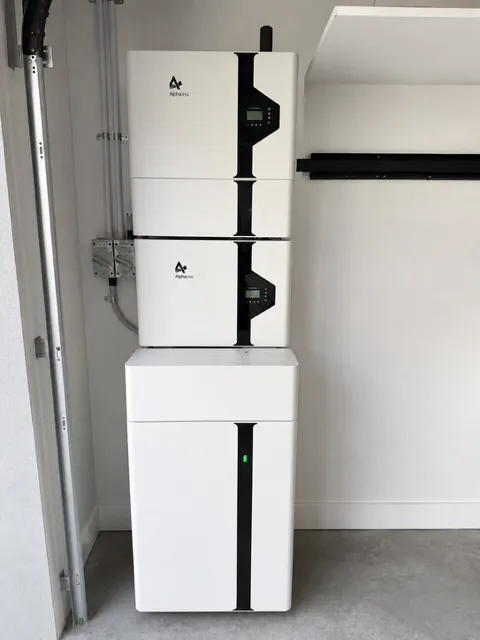
From one of our jobs
Battery and inverter stacked inside the garage
Photographed on site in Melbourne’s west. REC 37223.
The reason is practical. Every one of those jobs touches the same switchboard and needs the same access, and paying separately for four visits to the same wall is a poor use of money. Planning the whole electrification path for a period Newport home, then doing it in the right order, consistently costs less.
Where storage belongs in the sequence
The order that works in Newport is usually: board and safety switches first, because everything else connects to them. Then solar, sized around the tree shading that is real in this suburb. Then hot water, ideally a heat pump on a daytime timer, which is the cheapest storage a house will ever have. Then a battery for whatever evening load remains.
Doing storage before the hot water is a common and expensive inversion. Shifting hot water into daylight costs a fraction of what battery capacity costs and removes a large block of load from the evening, which reduces the battery size you actually need. We would rather size the battery after that shift than before it.
Board first, always
Every subsequent addition connects to it. Doing it last means reworking what you have already installed.
Hot water before storage
A heat pump on a daytime timer is cheap storage. It shrinks the evening load a battery has to carry.
Then size what is left
The battery should be sized against the evening load that remains after shifting, not the one you started with.
Tree shading affects how much you can store
Mature street trees around Mason Street and toward Newport Lakes cause genuine seasonal shading losses. That matters for a battery because it reduces the daily surplus available to charge from, particularly in winter when shadows are longest and evening loads are highest.
The practical consequence is that a Newport battery should be sized against realistic shoulder-season generation rather than a clear January day. For most homes here that lands at 8kWh to 10kWh usable. Buying 13kWh to charge from a tree-shaded array means paying for capacity that sits empty through the months you most want it full.
Old boards, old wiring and hot water
A high proportion of Newport homes reach the point where the original board, the original wiring and the original hot water service all fail within a few years of each other. A battery installation adds circuits and normally a backup sub-board, so where the board is original the upgrade at $800 to $3,500 or more comes first.
The upside is that once the board is right, everything else is straightforward and each subsequent addition is cheaper. Coastal exposure applies here too on the bay side of the suburb, so any outdoor enclosures associated with the installation should be coastal-rated for the same reasons the solar hardware is.
Backup, Jemena and the numbers
Essential circuits backup is the standard configuration: fridge, lights, internet, a few power points and often the fan on a gas heater. It is a sub-board decision made at install time and expensive to retrofit, so it is worth deciding deliberately rather than deferring.
Newport is Jemena while nearby Seaholme is Powercor, and the battery inverter needs a Jemena application under AS/NZS 4777.2. A 10kWh battery is $8,000 to $12,000 installed before rebates and $5,500 to $9,500 after the federal program at roughly $250 per usable kWh. Payback of 7 to 10 years applies where the battery cycles most days, which is why the shading assessment matters to the financial answer as well as the technical one.
On the ground
Newport battery notes
- Homes here commonly need board, safety switch and hot water work at the same life stage. Sequencing storage after the hot water changeover reduces the battery size you need to buy.
- Mature street trees cut winter generation meaningfully, which reduces the daily charging surplus and points to 8kWh to 10kWh usable rather than larger systems.
- Newport is Jemena while Seaholme, close by, is Powercor. The battery inverter application follows the address, and the two processes differ.
- Bay-side streets still warrant coastal-rated outdoor enclosures and fixings for any external components of the installation.
Licensed and accredited work by a local team. Read about Pivot Trade Services or see recent jobs across the western suburbs.
Answers
Newport questions
After, in nearly every case. A heat pump hot water service on a daytime timer costs far less per kilowatt hour of effective storage than a battery does, and it removes a large block of load from your evening. Sizing the battery after that shift usually means buying less capacity, which is cheaper than sizing it before.
Both, indirectly. Shading reduces solar output, which reduces the daily surplus available to charge the battery, and the effect is worst in winter when shadows are longest and evening loads are highest. That is why we size Newport batteries against realistic shoulder-season generation rather than peak summer output.
Yes, and in Newport that is often the cheapest route. Every one of those items touches the same switchboard and needs the same access, so combining them avoids paying four times for setup and certification. We plan the whole sequence, then stage it in an order where each step supports the next rather than needing rework.
Jemena, along with Williamstown, Spotswood, Yarraville and Footscray. Nearby Seaholme and Altona are Powercor. A battery inverter is a grid-connected inverter under AS/NZS 4777.2, so it changes inverter capacity at your connection and needs its own Jemena application before energising.
Expect 10 to 15 years of service life, with warranties commonly written as 10 years or around 10,000 cycles and guaranteeing 60 to 70 percent capacity retention at end of term. Lithium batteries do not stop, they fade, so the retention figure tells you what you will actually have to work with in year ten.
Other work we do in Newport
- Electrician in NewportThe suburb where the board, the wiring and the hot water all age out together
- Solar installation in NewportTrees first, then panels
- EV charger in NewportThe suburb where the charger is usually part of a bigger upgrade
- Split system in NewportPeriod homes with room to do it properly
- Heat pump hot water in NewportThe suburb where three things fail in the same decade
Get a Newport quote
Tell us the address and what you need. We quote Newport 3015 and the surrounding western suburbs in writing, with no obligation.
- Free
- On-site quotes
- Fixed
- Written pricing
- 100%
- Workmanship guarantee
- 5.0★
- 73 Google reviews