
One system, every room, properly zoned
Ducted Refrigerated Cooling for Whole House Comfort
Ducted cooling is the option people move to after a run of humid February nights when the evaporative system stopped keeping up. It works on any day of the year because it removes moisture from the air rather than adding it, and it cools every room from a single controller.
- REC 37223
- Melbourne west
- Fixed quotes
The short answer
Ducted refrigerated cooling uses one outdoor condenser and a roof or subfloor fan coil to cool every room through insulated ducts, and it works regardless of humidity because it dehumidifies as it cools. Unlike evaporative cooling it needs the house closed up, not open. Systems are sized in kilowatts against room volume, glazing and orientation, typically 14 to 20 kW for a family home, and zoning limits how much of that capacity runs at once.

It is also the option with the most ways to be installed badly. Duct sizing, roof space temperatures, return air and zone design all have more effect on the result than the badge on the outdoor unit. This page covers what we actually look at when we design one for a house in the west.
Refrigerated ducted compared with evaporative
The two systems work on opposite principles, so they suit different days. Evaporative cooling pulls outside air through wet pads, which cools it and adds moisture, and it needs windows and doors open to push that air out again. It is cheap to run and it is excellent on a dry 38 degree northerly.
Refrigerated ducted cools and dries the air inside a closed house. It holds a set temperature on humid days when evaporative struggles, it keeps smoke, pollen and dust outside, and it can reverse to heat in winter if you specify a reverse cycle unit. It costs more to buy and more per hour to run. If your household sleeps badly on sticky nights, that is the trade you are making.
Ducts, roof space heat and static pressure
On a 40 degree day a Melbourne roof space will sit well above 50 degrees. Every metre of duct up there is fighting that, so insulation value and duct condition matter as much as the equipment. We specify insulated flexible duct with a decent R value, keep runs as short and straight as we can, and support them so they do not sag into long dips that choke airflow.
The other quiet killer is static pressure. Too many tight bends, undersized branches or a return air grille that is smaller than the system needs, and the fan works harder to move less air. You feel that as weak outlets in the far bedrooms and hear it as noise at the grilles. We size return air deliberately, because it is the part most often left too small on budget installs.
Duct sizing
Each branch sized to the airflow the room needs, not a standard 200 mm run to everything regardless of room size.
Return air
Large, accessible and filtered. An undersized return starves the system and makes it noisy no matter how good the outdoor unit is.
Outlet placement
Positioned to wash the hot surfaces, typically near windows, and away from where you sit or sleep directly under the airflow.
Condensate management
Graded drain, safety tray and overflow switch on any roof mounted fan coil. Cooling makes a lot of water on a humid day.
Zoning a cooling system honestly
Zones let you cool bedrooms overnight and living areas during the day, which cuts running cost and stops you paying to cool empty rooms. Most family homes end up with three or four zones grouped by how the household actually uses the house, not by compass direction.
The limitation is the same as it is on heating. The indoor fan needs a minimum air path, so you cannot run one small zone alone on a large system without a bypass or a variable speed fan. We design zone groups so the smallest realistic combination still keeps the unit in range, and we tell you which combinations to avoid.
Adding cooling to existing heating ductwork
If you already have gas ducted heating and want cooling, there are two paths. An add on cooling coil and outdoor unit fitted to the existing furnace and ducts, or a full changeover to a reverse cycle ducted system that does both from one box.
Add on cooling can work, but the existing duct was sized for hot air from a burner and often cannot carry the airflow cooling needs, and you keep the gas running cost through winter. Nine times out of ten we recommend the reverse cycle changeover, because you get one system, one controller, lower winter running costs and access to Victorian Energy Upgrades discounts on the invoice. We will still price both if you want the comparison.
What good commissioning looks like
When the install is finished we measure rather than assume. That means checking the temperature difference across the indoor coil, verifying refrigerant charge by subcooling or superheat rather than by feel, balancing the outlets so the far bedroom gets its share, and confirming the zone motors are driving fully open and closed.
You should get a handover that includes the controller basics, where the filters are and how to get at them, and what a normal running noise sounds like. Everything electrical is signed off with a Certificate of Electrical Safety, and our workmanship is guaranteed 100%.
On the job
Ducted Cooling in Melbourne's west
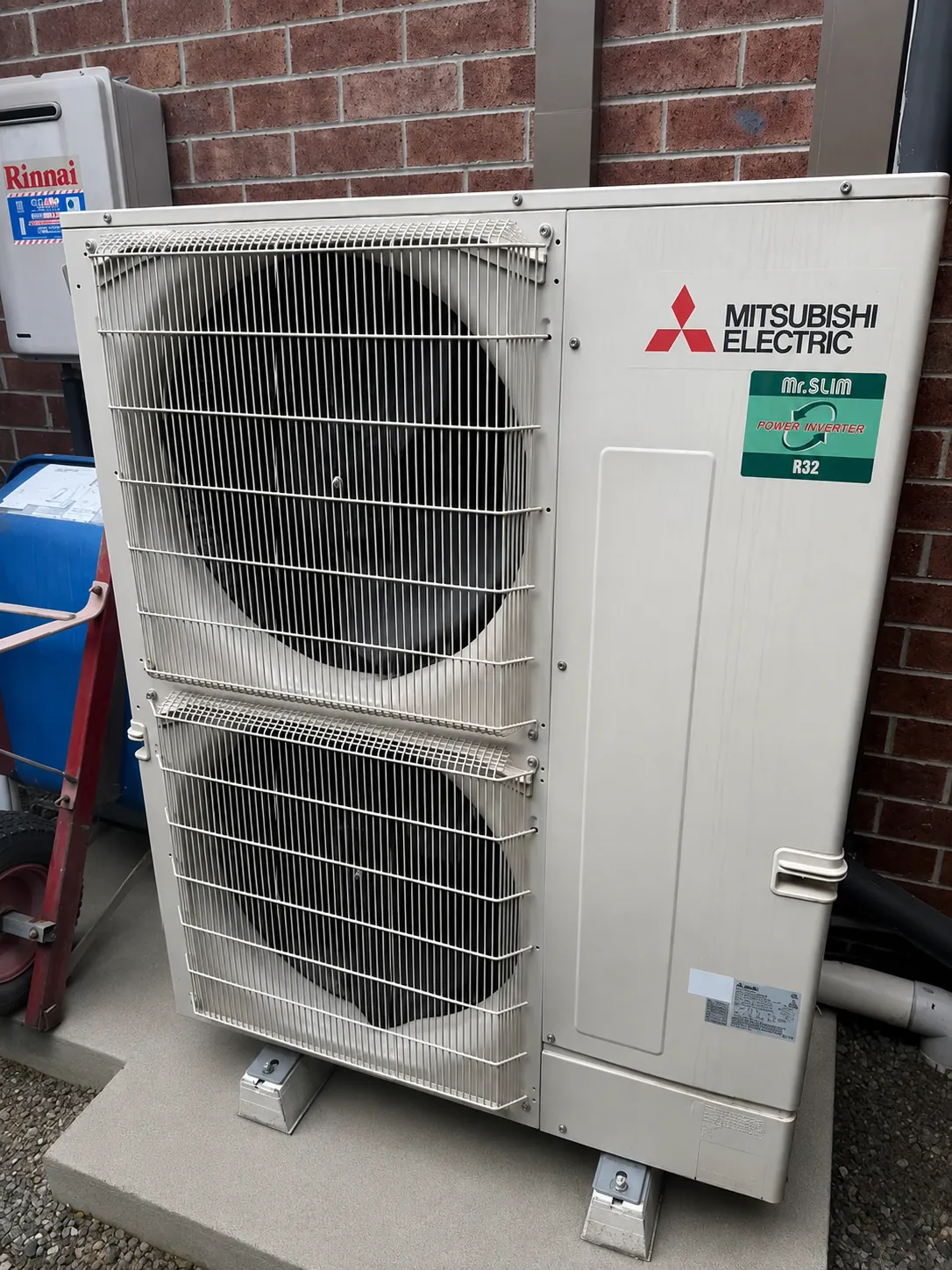
New outdoor split ducted unit replacing an old gas heater 
Diagnosing a system before quoting a replacement
Licensed and accredited work by a local team. Read about Pivot Trade Services or see recent jobs across the western suburbs.
Answers
Frequently asked questions
Commonly 14 to 20 kW, but that range is wide for a reason. Ceiling height, insulation, how much glass faces west and whether the plan is open all change the answer significantly. Two houses of identical floor area in Tarneit can differ by 4 kW. We calculate it room by room rather than working off the number of bedrooms.
No, and this is the key difference from evaporative. Refrigerated systems recirculate and dry the indoor air, so open windows mean you are cooling the street. Close the house up, draw the blinds on the western side in the afternoon and the system will hold temperature on far less power.
It costs more per hour than evaporative, but less than people expect if it is zoned and sized correctly. Inverter systems throttle back once the house reaches temperature rather than running flat out. Cooling only the zones you occupy and setting 24 rather than 20 makes a bigger difference to the bill than the brand you choose.
It can, and sometimes must on small blocks, but ground level on a slab is easier to service, quieter inside the house and safer to maintain. Roof mounting adds frame costs and access requirements. We will only recommend it when there is genuinely nowhere else sensible.
Yes, if it was sized for that room rather than for the average. West facing glass on a Melbourne summer afternoon is a large heat load, and it deserves both extra capacity and outlets positioned to wash the glass. External shading or a good blind reduces the required capacity more cheaply than upsizing the system does.
Two to four days for most homes. New ductwork throughout, a switchboard upgrade or difficult roof access extends that. We work in the roof early in the day during summer for obvious reasons and keep the house liveable in between.
Book ducted cooling
Tell us what you need and we will give you a written price, not a range that moves on the day.
- Free
- On-site quotes
- Fixed
- Written pricing
- 100%
- Workmanship guarantee
- 5.0★
- 73 Google reviews